Water Is Not Free: Why Utilities Hold the Key to Achieving SDG 6 in the Pacific
PWWA’s CEO shares a leadership perspective on the critical role of water utilities, regional collaboration, and capacity building in achieving SDG 6 in the Pacific.
By Pitolau Lusia Sefo Leau
12/23/20253 min read
When we speak about sustainable development in the Pacific, we often start with climate change, economic resilience, or health outcomes. Yet all of these depend on one essential service that is still too often taken for granted: safe, reliable water and sanitation.
This was the message I shared when I joined the 9th Pacific Forum on Sustainable Development, convened by ESCAP and the Pacific Islands Forum Secretariat, as part of a regional panel on Sustainable Development Goal 6 - ensuring the availability and sustainable management of water and sanitation for all. Speaking alongside regional organisations such as SPC and UNESCO, I was asked a simple but critical question: what role do regional support mechanisms play in addressing water security challenges in the Pacific?
My answer was equally simple - utilities matter, and regional collaboration is how we strengthen them.
The Pacific’s water reality
Across the Pacific, access to basic water and sanitation services continues to lag behind other regions of the world. This is not due to a lack of commitment, but to a convergence of structural challenges: fragile and ageing infrastructure, climate vulnerability, persistent investment gaps, limited data, and ongoing constraints in technical and human capacity.
Too often, water is still perceived as a free and limitless resource. In reality, delivering safe water requires robust infrastructure, skilled operators, sound governance, reliable data, and sustained financing. Where utilities lack capacity, the consequences are clear, not only for SDG 6, but for health, economic growth, education, and social equity more broadly.
This is why I believe that strong utilities are the backbone of sustainable development in the Pacific. Without them, the SDGs remain aspirations rather than outcomes.
The role of PWWA: connecting policy, practice, and people
The Pacific Water and Wastewater Association exists to strengthen this backbone. We are a regional membership organisation representing 30 utilities across 21 Pacific countries and territories, alongside private sector providers, government agencies, regional organisations, individuals, and development partners.
Our role as a Secretariat is not to deliver services directly, but to coordinate advocacy, collaboration, and capacity building - enabling utilities to perform better and to play their full role in achieving water security and SDG 6 across the region.
At its core, PWWA’s work is about building systems, not projects.
Advocacy that highlights water to decision-makers
One of our most important functions is advocacy. Water security cannot be solved at the operational level alone; it must be understood and prioritised at the highest levels of policy and political decision-making.
This is why the annual PWWA Conference and Industry Expo, held alongside the Pacific Water and Wastewater Ministers Meeting, has become such a powerful regional platform. Now in its ninth year, it brings together utilities, governments, private sector partners, development agencies, and Ministers to engage in informed dialogue about water challenges and solutions.
A significant breakthrough in recent years has been our collaboration with SPC to elevate water security discussions to the Pacific Islands Forum Leaders level. When water reaches this level of regional leadership, it signals a shift from technical concern to strategic priority.
Evidence to inform investment
Advocacy must be backed by evidence. Through our annual utility benchmarking programme, delivered in collaboration with the World Bank’s IBNet team, PWWA tracks utility performance across the Pacific and reports these findings directly to Ministers.
These benchmarking results provide leaders with a clear snapshot of where utilities are performing well, where challenges persist, and where investment is most urgently needed. In a region where resources are limited, data-driven decision-making is essential.
Building people, not just infrastructure
Infrastructure alone does not deliver water - people do. This is why capacity building remains central to PWWA’s mission.
Our Young Water Professionals programme, delivered in partnership with DFAT through the Australian Water Partnership, is one of our most successful initiatives. It is creating a new generation of Pacific water leaders who understand both the technical and social dimensions of water and sanitation.
Equally impactful are our utility twinning and peer-to-peer partnerships, supported by ADB, AWA, and AWP. These programmes harness the expertise of strong utilities to directly support those needing guidance, improving performance, strengthening governance, and helping utilities access financing for infrastructure investments. The results are tangible — and they directly contribute to SDG 6 targets.
A call for sustained regional commitment
There are many initiatives underway across the Pacific, but the lesson from my years working in this sector is clear: progress is fastest when we act collectively.
Regional platforms like the Pacific Forum on Sustainable Development matter because they give space for honest reflection, shared learning, and coordinated action. They also remind us that water security is not just a technical issue, it is a development, governance, and equity issue.
If the Pacific is serious about achieving SDG 6 by 2030, we must stop treating water as an afterthought and start recognising utilities as strategic institutions essential to our future.
At PWWA, we will continue to advocate, convene, and build capacity because when water systems are strong; our communities, economies, and nations are stronger too.
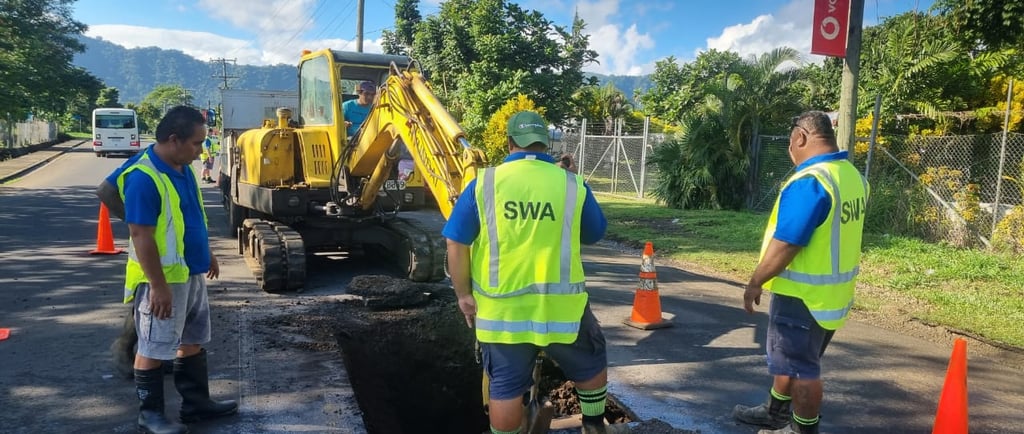
Photo Source: Samoa Water Authority